
Specification · $PERPS
Trade the loop
that never closes.
Perps is built around one instrument: the perpetual contract. No expiry. No settlement. Continuous price discovery, for traders who think in basis points, funding rates and leverage.
Instrument
- Market
- ETH / USD perpetual
- Expiry
- None
- Settlement date
- None
- Margin
- ETH, 0.0005 to 1 per position
- Leverage
- 1× to 10×
- Mark price
- Chainlink ETH / USD feed
- Funding
- Accrues every second, up to 0.01% of notional per hour at full skew; the heavier side pays
- Trading fee
- 0.25% of notional to open, 0.25% to close
- Maintenance
- 1% of notional
- Liquidation
- Open to anyone; the liquidator earns up to 5% of the margin
- Maximum profit
- 100% of notional, reserved from the vault at open
- Counterparty
- The vault: anyone can supply ETH to it
A dated future counts down to a settlement day. A perpetual does not. The position stays open for as long as its margin holds. Every figure above is fixed in the contract; none of them can be changed.
Trade
Connect a wallet to see your positions.
No open positions.
Positions could not be read. Retrying.
Vault
The vault is the other side of every position. It earns the trading fees, the net funding and whatever traders lose, and it pays what they win. Each position reserves its maximum profit from the vault when it opens, so every payout is covered. Shares are priced at the vault's value with open positions marked to the feed.
Only liquidity not reserved for open positions can be withdrawn. Vault returns follow trader results: when traders win, the vault loses.
Funding
With no expiry to pull it toward spot, a perpetual needs another anchor. Funding is that anchor. When the contract trades above its index, longs pay shorts. When it trades below, shorts pay longs. On Perps the rate follows the skew of open interest and accrues every second. Use the tool to size the cost over any holding period.
Margin and liquidation
Leverage sets the initial margin: 10× means 10% of notional posted. Maintenance margin sets the line under it. When losses bring equity down to that line, the position is liquidated. Higher leverage moves the line closer to entry.
Vocabulary
- Basis pointOne hundredth of a percent. 25 bps is 0.25%.
- Funding rateThe periodic payment between longs and shorts that keeps a perpetual near its index.
- Index priceThe reference spot price the contract is anchored to.
- Mark priceThe fair price used to value positions and trigger liquidations, so one print cannot force a close.
- Open interestThe number of contracts open at a given moment. Every long has a short.
- LeverageNotional divided by margin posted. Exposure, precisely defined.
- Maintenance marginThe minimum equity a position must keep to stay open.
- LiquidationThe forced close of a position whose equity reached maintenance.
The loop
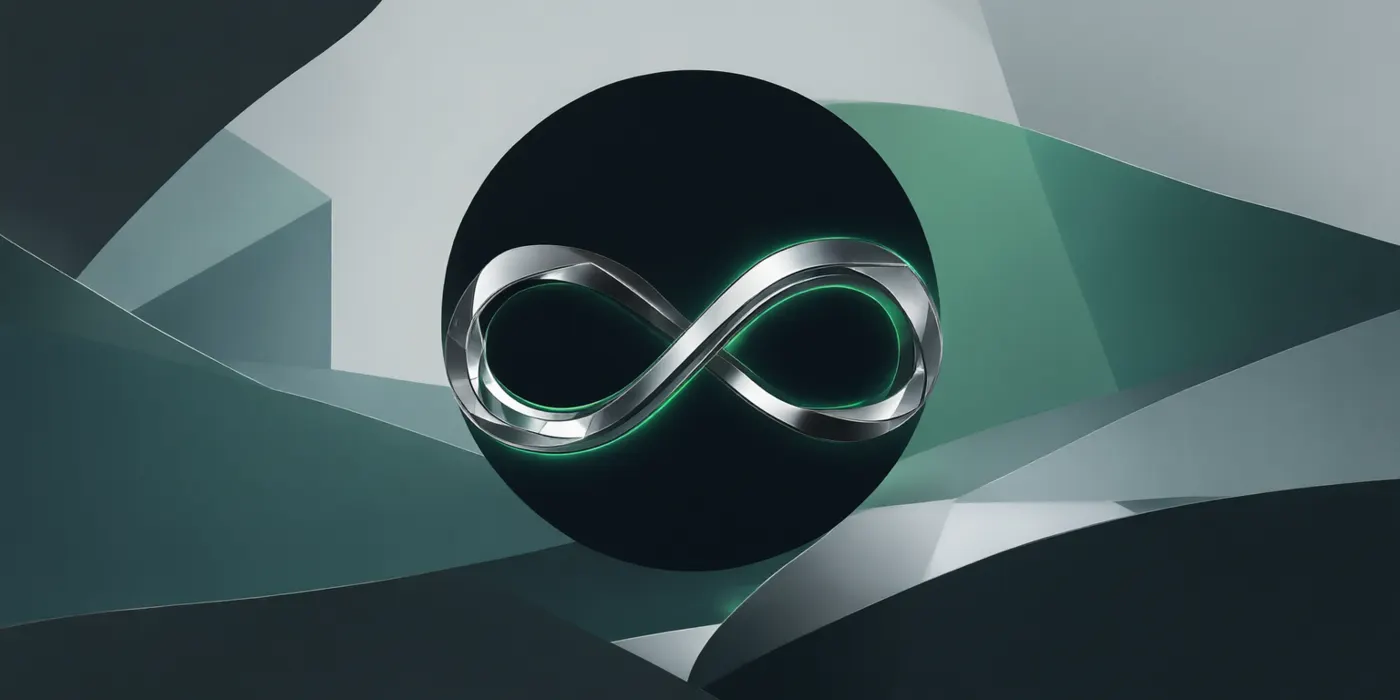
No calendar. No roll. No forced close on a date someone else chose. The perpetual is a loop: it opens, it marks, it funds, and it keeps going.
Loop, the chrome ring, is the mark of that contract: sharp edges, no beginning, no end. Margin, the green point that runs it, is leverage: quick, measured, never reckless.